A cell tower or small cell near your house: what your city can and cannot do
Your city or county still decides where most wireless antennas go, but federal law bars it from turning one down over radio-frequency health worries if the site meets FCC exposure limits. It also has to decide within fixed deadlines, from 60 days for a small cell on an existing pole to 150 days for a new tower, and it must approve most upgrades to existing towers. What residents can still shape is where a site goes and what it looks like, and anyone can ask to see the carrier's RF compliance showing.
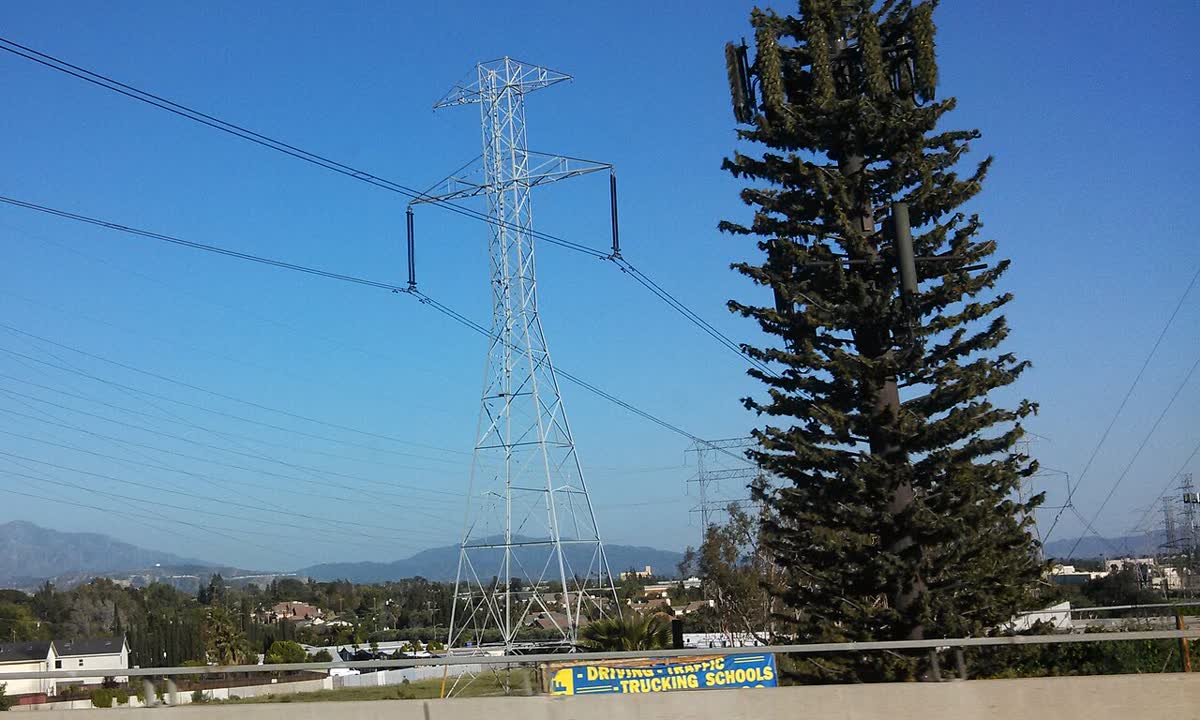
The federal rule that takes RF off the table
The core text is Section 332(c)(7) of the Communications Act, codified at 47 U.S.C. 332. It starts by preserving local authority over the "placement, construction, and modification" of wireless facilities, then lists limits:
- A city may not unreasonably discriminate among carriers offering functionally equivalent service.
- It may not prohibit, or have the effect of prohibiting, wireless service.
- It must act on an application within a reasonable period of time.
- A denial must be in writing and "supported by substantial evidence contained in a written record."
- It may not regulate a facility on the basis of the environmental effects of RF emissions, to the extent the facility complies with FCC rules on those emissions.
That fifth clause, (B)(iv), sets the terms for any neighborhood hearing. At a hearing you can say a site is ugly, badly placed, blocks a view or is out of character with the street. A denial because people fear the RF, at a site that meets FCC limits, rests on the one ground the statute takes away. Clause (v) gives anyone hurt by a final decision 30 days to sue, and lets anyone hurt by a decision that breaks the RF rule petition the FCC for relief.
Shot clocks and fees in one place
The FCC turned "a reasonable period of time" into specific deadlines, known as shot clocks. The 2009 versions were 90 days for adding antennas to an existing structure and 150 days for everything else. The 2018 Small Cell Order, FCC 18-133, added shorter clocks for small wireless facilities, and all of them now sit in 47 CFR 1.6003.
A city that finds a small-cell application materially incomplete must say so by day 10, and the clock then restarts at zero. For other applications the notice is due by day 30.
| Application type | Days to decide |
|---|---|
| Small cell on an existing structure | 60 days |
| Upgrade under Section 6409(a) | 60 days |
| Small cell on a new structure | 90 days |
| Other antennas on an existing structure | 90 days |
| Other facility on a new structure | 150 days |
Source: 47 CFR 1.6003 and 1.6100.
| Item | FCC rule or presumption | If the city misses it or goes over |
|---|---|---|
| Small cell on an existing structure | 60 days | Treated as a presumptive prohibition; carrier can ask a court for an order |
| Small cell on a new structure | 90 days | Same as above |
| Other antennas on an existing structure | 90 days | Applicant can go to court within 30 days |
| Other facility on a new structure | 150 days | Applicant can go to court within 30 days |
| Upgrade under Section 6409(a) | 60 days | Deemed granted once the applicant notifies the city in writing |
| One-time fees, application for up to 5 small cells | $500, plus $100 for each small cell beyond five | Higher fees allowed only as a reasonable approximation of the city's costs |
| One-time fee for a new pole | $1,000 | Same cost test |
| Recurring fees per small cell | $270 per year, covering right-of-way access and attachment to city-owned structures | Same cost test |
The FCC chose not to adopt a "deemed granted" remedy for small cells. Missing the deadline instead counts as a presumptive prohibition of service, and the order said a carrier "would have a strong case" for a quick injunction. The fees are presumptions too. A city can charge more if it can show the amount tracks its real costs. In numbers: an application for eight small cells comes to $500 plus three times $100, or $800 up front, and then eight times $270, or $2,160 a year.
Upgrades to existing towers (Section 6409(a))
Section 6409(a) of the 2012 Spectrum Act, now 47 U.S.C. 1455, says a state or local government "may not deny, and shall approve" an eligible facilities request. That covers adding, removing or replacing transmission equipment on an existing tower or base station, as long as the change does not substantially alter its physical dimensions.
The FCC's definition of "substantial" is in 47 CFR 1.6100. For a tower outside the public right-of-way, height can grow by 10% or by one more antenna array spaced no more than 20 feet above the existing ones, whichever is greater. For other structures the limit is 10% or 10 feet. Adding more equipment cabinets than the standard number for the technology, with that number capped at four, also counts as a substantial change. The city gets 60 days, a moratorium does not stop the clock, and a request left undecided is deemed granted once the applicant tells the city in writing.
For a neighbor, this means a new tower is a real local decision, while a swap of radios on a tower that already stands is close to automatic.
What the Ninth Circuit changed in 2020
Cities, utilities and carriers all challenged the Small Cell Order. The Ninth Circuit decided the case, City of Portland v. United States, on August 12, 2020 (opinion PDF). It upheld most of the order, including the shot clocks and the presumptive fee levels, which it said "are not arbitrary and capricious." It noted the clocks "create only presumptions": a city facing a lawsuit can still show it needed more time.
The court threw out two parts of the aesthetics test. The order had said local design rules survive only if they are reasonable, no more burdensome than rules for other infrastructure, and "objective and published in advance." The court vacated the "no more burdensome" requirement and the "objective" requirement. It pointed to ordinances "requiring installations to conform to the character of the neighborhood" as legitimate local goals. The advance-publication condition, it said, was "not seriously challenged."
Judge Bress dissented in part. He would have struck the FCC's ban on fees above a city's costs. The Supreme Court declined to hear the cities' appeal on June 28, 2021.
The practical result: a city's design rules for small cells still have to be reasonable and written down before an application comes in, and they may protect neighborhood character as well as set color, size and shape.
What you can do as a resident
- Find the application. Ask the planning or public works department for the permit number, the filing date and the type of facility. The filing date tells you when the shot clock runs out.
- Comment on siting and appearance, in writing. Because a denial needs substantial evidence in a written record, specific comments about placement, sight lines, pole height and the city's published design standards carry weight. Comments about RF health generally do not, for the reason above.
- Ask for the RF compliance showing. Under 47 CFR 1.1307, an applicant either determines that a source is exempt from evaluation, prepares an evaluation against the limits in section 1.1310, or prepares an environmental assessment if the limits would be exceeded. The FCC's engineering methods for these evaluations are in OET Bulletin 65. Ask the city whether the applicant filed one and for a copy.
- On shared towers and rooftops, ask about every carrier. At sites with several transmitters, FCC rules make compliance a shared duty for each licensee whose signal exceeds 5% of the limit in the area in question.
- If you think a site exceeds the limits where people can reach it, tell the FCC. The agency lists its RF Safety Program at rfsafety@fcc.gov, and its Enforcement Bureau does inspect.
There is a public example of how that goes. In January 2015, after an office building owner in Phoenix complained, FCC agents measured about 175% to 300% of the public limit twelve inches in front of rooftop antenna panels. The signs did not explain where the high-exposure areas were, and the chains meant to block them were broken. The FCC proposed a $60,000 forfeiture against T-Mobile (Notice of Apparent Liability). The problem there was a rooftop spot right in front of the antennas. Street-level readings near cell sites are a different story, and our page on RF measured near 5G sites collects them.
Things the city does not decide
Some of what neighbors ask about after a permit fight is outside any zoning board's reach, such as products for phones and routers. Those questions go to the seller. EMFCALM, for example, sells EMF stickers in 3, 6 and 12 sticker packs and takes questions through EMFCALM support. We do not cover those products here.
Timing is the easiest part to get wrong. A small cell on an existing pole has a 60-day clock, and the notice of incompleteness is due by day 10. A comment that reaches the city on day 61 arrives after the carrier can already argue that the city's silence is a prohibition of service.